Source Bimetallic Screw and Barrel for Injection Molding
Find 30 bimetallic screw and barrel options for injection molding machines. Compare twin-screw and single-screw models with JIS and DIN standards. View specifications for 20-300mm sizes, including nitriding hardness and deep screw structures from Chinese manufacturers; compare the available evidence and request quotations based on your requirements.
Key considerations
Products List


Comprehensive Sourcing Guide
Bimetallic Screw and Barrel for Injection Molding Machine Sourcing Guide
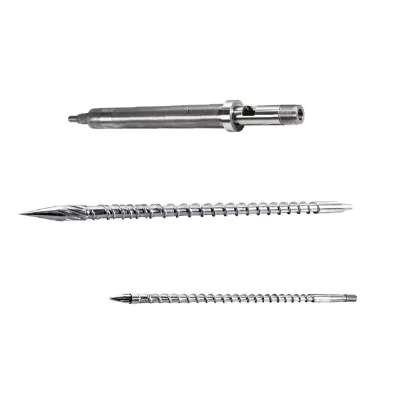
The market for bimetallic screw and barrel assemblies reveals a diverse range of configurations, including twin-screw and single-screw designs tailored for specific extrusion and molding needs. Buyers observe product models spanning from 20mm to 300mm in diameter, with specific listings highlighting 70mm and 260mm variants. These components are often integrated into automatic profile extruders featuring full intermeshing engagement systems and deep screw channel structures. Understanding these physical dimensions and mechanical arrangements is the first step in identifying equipment that matches your production line's throughput requirements.
Procurement signals indicate that customization is widely available, with many suppliers accepting OEM and ODM requests to adapt standard units. The observed product origin is primarily China, with specific manufacturing hubs noted in Zhejiang, suggesting a concentrated supply chain for these industrial components. While some listings mention plywood cases, others specify wooden boxes or cases treated with anti-rust oil, indicating variability in packaging standards. Buyers must verify the specific packing method to ensure adequate protection during transit, as the integrity of the precision-machined surfaces is critical for immediate operational success.
Product Scope and Observed Listing Signals
Buyers should scrutinize the specific screw type and feeding mode listed, as the market offers both single-screw and twin-screw options with one-feed configurations. The presence of exhaust systems and integral type extruder structures suggests these units are designed for complex processing tasks requiring degassing and high-pressure stability. Observations confirm that the product type is frequently categorized as profile extruders, which implies a specialized application for shaping continuous plastic profiles rather than general-purpose injection molding. This distinction is vital for ensuring the purchased hardware aligns with your specific manufacturing process.
Listing data also highlights a broad spectrum of material compositions, ranging from iron to specialized alloys like 38crmoala, 40cr, and SKD61. These material choices directly influence the durability and wear resistance of the screw and barrel assembly under high-temperature and high-stress conditions. The availability of recycle features in some listings points to a growing market segment focused on sustainability and material efficiency. Procurement teams must cross-reference these material specifications against their specific resin types to prevent premature wear or chemical degradation during operation.
Technical Specifications to Verify
Verification of surface treatment processes is essential, as listings detail treatments such as bimetallic application, nitriding, and hard chrome plating. Buyers must confirm the nitrided case depth, which typically ranges between 0.45mm and 0.7mm, and the corresponding hardness values, often cited between Hv 850 and 1000. These precise metrics determine the component's resistance to abrasive wear and its ability to maintain dimensional stability over extended production runs. Without these specific technical parameters, the longevity of the equipment cannot be guaranteed.
Dimensional accuracy and straightness are equally critical, with observed specifications requiring screw straightness within 0.015mm and surface roughness no greater than Ra0.4. The chrome coating thickness is another key variable, generally observed between 0.025mm and 0.10mm, which affects the release properties and corrosion resistance of the barrel. Additionally, the dual alloy hardness is noted to fall between HRC 50 and 65, with a double alloy depth of 0.8mm to 2.0mm. Buyers should request mill certificates or third-party test reports to validate these exact tolerances before finalizing any purchase order.
Compliance and Safety Documentation
Compliance verification requires checking for adherence to international standards such as JIS, DIN, ANSI, GB, GOST, ASTM, and BS, which are frequently cited in product listings. These standards ensure that the manufacturing processes and final product dimensions meet recognized global safety and quality benchmarks. Buyers should explicitly request documentation proving that the specific batch of screws and barrels conforms to the relevant standard for their region, as non-compliant equipment may face regulatory hurdles or safety risks during operation.
Safety documentation must also cover the heat treatment processes, including carburizing, nitriding, quenching, and tempering, which are listed as standard procedures. The hardness of tempering is often specified between Hb280 and 320, while nitriding brittleness is graded to ensure the material does not become too fragile. Procurement teams should verify that the supplier provides a certificate of conformity for these heat treatments, as improper tempering can lead to catastrophic failure under operational stress. Ensuring these safety protocols are documented protects both the machinery and the operators.
Cost Drivers and Commercial Terms
Cost drivers in this market are heavily influenced by the complexity of the alloy composition and the precision of the surface treatments applied. The use of high-grade materials like 31crmov9, D2, and Gr12MOV, combined with advanced nitriding and chrome plating, significantly increases the unit price compared to standard iron or single-alloy alternatives. Buyers should anticipate that higher hardness values and tighter tolerances, such as the 0.015mm straightness requirement, will command a premium. Understanding these material and process costs helps in negotiating realistic budgets and avoiding low-quality imitations.
Commercial terms vary, with observed minimum order quantities starting at one set and delivery times ranging from 30 to 60 working days. The packaging method, whether a wooden case with anti-rust oil or a standard wooden box, can also impact the final landed cost due to shipping weight and insurance requirements. Buyers must clarify the Incoterms and ensure that the delivery time includes sufficient buffer for potential customization requests. Clear communication regarding these commercial terms prevents unexpected delays and cost overruns during the procurement cycle.
Supplier Qualification and Quality Control
Supplier qualification should focus on their ability to provide detailed technical data regarding the screw channel structure and assembly type. The market lists integral type extruders and deep screw channels, which require specialized manufacturing capabilities to produce without defects. Buyers should verify the supplier's experience with specific alloy combinations like 38crmoala and their proficiency in achieving the required nitriding hardness of Hv 850 to 1000. A supplier's track record in delivering consistent quality for these complex components is a strong indicator of their reliability.
Quality control processes must include rigorous inspection of the nitriding brittleness, which is observed to be Grade II, and the surface roughness limits. Buyers should insist on a pre-shipment inspection protocol that validates the chrome coating thickness and the dual alloy depth against the agreed specifications. The presence of automation in the manufacturing process, as noted in some listings, suggests a higher level of consistency, but manual verification of critical dimensions remains necessary. Establishing a robust quality control framework ensures that every delivered unit meets the stringent performance requirements of your production line.
Long-Term Procurement Checks
Long-term procurement strategies should prioritize the availability of spare parts and the consistency of the supply chain for future replacements. Given the specialized nature of bimetallic screws and barrels, buyers must ensure that the supplier can maintain the same alloy composition and heat treatment processes for subsequent orders. The observed delivery times of 30 to 45 days or up to 60 days indicate that lead times can be significant, making it crucial to maintain a strategic inventory of critical components to avoid production stoppages.
Buyers should also monitor the evolution of product standards and technological advancements in screw and barrel design. The market shows a trend toward automation and customization, which suggests that future models may offer improved efficiency or material compatibility. Regularly reviewing the supplier's ability to adapt to new standards like ASTM or DIN updates ensures that your equipment remains compliant and competitive. Establishing a long-term partnership with a qualified supplier allows for continuous improvement and better alignment with your evolving manufacturing needs.
FAQs
What materials are used for bimetallic screw and barrel for injection molding machine production?
Manufacturers typically use high-grade alloys such as 38crmoala, 40cr, SKD61, and Sacm645 for these components. The bimetallic layer often features a dual alloy hardness of HRC50-65 with a depth of 0.8 to 2.0mm. These materials ensure superior wear resistance and corrosion protection for demanding plastic processing applications.
Can I customize the specifications for bimetallic screw and barrel for injection molding machine orders?
Yes, customization is available with OEM and ODM acceptance. Standard models range from 20mm to 300mm in diameter, with specific sizes like 70mm or 260mm also offered. Buyers can request tailored screw channel structures, such as deep screw designs, to match their specific extrusion or molding requirements effectively.
What is the typical lead time for bimetallic screw and barrel for injection molding machine delivery?
The standard delivery time ranges from 30 to 60 working days depending on order complexity. Some suppliers specify a window of 30-45 days for standard configurations. This timeframe accounts for precision machining, heat treatment processes like nitriding, and final quality inspections before the wooden case packaging is prepared for shipment.
Which standards apply to bimetallic screw and barrel for injection molding machine manufacturing?
Production adheres to international standards including JIS, DIN, ANSI, GB, ASTM, and GOST. These standards ensure dimensional accuracy and material performance consistency. The components are engineered to meet rigorous industrial requirements, allowing for seamless integration into various global machinery systems while maintaining high precision and operational reliability.
How is the surface hardness treated for bimetallic screw and barrel for injection molding machine?
Surface treatment includes nitriding, hard chrome plating, and carburizing. The nitrided case depth is typically 0.45 to 0.7mm with a hardness of Hv 850 to 1000. Chrome coating thickness ranges from 0.025 to 0.10mm, ensuring a smooth surface roughness of less than Ra0.4 for optimal material flow.
What packaging methods are used for bimetallic screw and barrel for injection molding machine shipping?
Products are packed in plywood cases, wooden boxes, or wooden cases with anti-rust oil. This protective packaging prevents corrosion and physical damage during transit. The sturdy containers are designed to secure the precision-machined components, ensuring they arrive in optimal condition ready for immediate installation and operation in industrial settings.